Hey everyone, let’s cut through the tech jargon for a sec—if you’ve ever stared at a loading screen while streaming a show or cringed at a laggy Zoom call during a work meeting, you’ve felt the impact of something way more important than just your internet plan: fiber management. I run a fiber management company, and let me tell you, most people (even a lot of IT folks) don’t realize how tightly fiber and cloud computing are intertwined. It’s not just about laying down glass cables anymore; it’s about keeping those cables organized, protected, and working at peak capacity so your cloud apps don’t go down when you need ’em most. Let’s break this down like we’re chatting over coffee, no stuffy whitepapers allowed. Fiber Management

First, let’s ground this—cloud computing is basically the backbone of every digital thing you use daily. Whether you’re saving photos to Google Drive, running a small business on Shopify, or a hospital storing patient records in a secure cloud server, all that data lives in faraway data centers. And guess what moves that data at light speed? Fiber-optic cables. Those thin glass strands carry data way faster, over way longer distances, than old copper cables—like, a thousand times more bandwidth, no lag, no signal degradation. But here’s the thing: a single data center isn’t just one big pile of cables. It’s a web of fiber connecting servers, storage arrays, routers, and other data centers hundreds of miles away. That’s where fiber management comes in, and it’s not just “organizing cables” — it’s the unsung hero keeping the cloud running.
Let’s start with the biggest pain point in data centers: cable chaos. I’ve seen first-hand (working with clients ranging from tiny co-location spaces to hyperscale cloud providers) what happens when fiber isn’t managed well. You walk into a server closet or data center room, and cables are strewn everywhere, tangled like headphone cords in a jacket pocket. Now, imagine that’s the equivalent of a highway with no road signs, no traffic lights, and a bunch of cars (data packets) crashing into each other. When a technician needs to trace a faulty cable, they’re spending hours digging through a mess instead of fixing the issue. That means downtime for your cloud apps—downtime that costs businesses millions. A 2023 study I worked with a data center consultant on found that unmanaged fiber causes 30% more unplanned downtime in cloud environments, just because of time wasted troubleshooting physical connections. Fiber management fixes that with clear labeling, organized cable routing, and easy-to-read inventory logs. It’s like labeling every lane on that highway so no one gets lost.
Next up, bandwidth scaling. Cloud computing grows fast—if you’re a startup, you might go from 10 cloud users to 100 in six months, and your data needs jump right along with it. Fiber cables can handle more bandwidth than copper, but only if you don’t overcrowd the connections. If you’re cramming too many fibers into a single patch panel without proper management, you’re limiting how much data can flow through. We’ve had a client recently—they’re a mid-sized SaaS company—who tried to skip fiber management to save a few bucks when they scaled. They ended up needing to rewire half their data center just 9 months later because their connections were overloaded. With the right fiber management, they can plan for scaling from the start: we use modular patch panels that let you add more fibers as needed without disrupting existing connections. It’s like having a road that’s built to expand when more cars need to use it, instead of a narrow country road that gets blocked every time a new driver wants on.
Then there’s protection. Fiber cables are fragile—even a tiny kink in the glass can break the signal, and if that happens in a cloud data center, suddenly your team can’t access their cloud files, your customers can’t use your service, and that’s a PR nightmare. Proper fiber management uses things like cable trays, strain reliefs, and protective enclosures to keep fibers safe from physical damage. I’ve seen a data center that had a water leak from a broken pipe—because their fibers were neatly organized in sealed trays instead of lying loose on the floor, only 2% of their connections were damaged, compared to another similar facility nearby that lost 40% because unmanaged fibers were exposed. For cloud providers, reliability is non-negotiable—99.99% uptime (or higher) is the standard, and fiber management is key to hitting that number. No physical damage = no unexpected outages = happy customers, which is everything in cloud.
Wait, let’s not forget about remote cloud environments. A lot of businesses now use distributed cloud—data centers in multiple locations, edge computing nodes closer to where users are, instead of one big central spot. That means fiber routes are longer, and there are more places where connections can go wrong. Fiber management tools now have cloud-based inventory tracking, so you can check on a fiber connection between a data center in Texas and an edge node in California from your laptop, no need to fly a tech out to the middle of nowhere. We recently rolled out a cloud-based fiber management platform for a retail client with 50+ stores using cloud POS systems. They could trace a faulty fiber link between their main data center and a store in Florida in 10 minutes, instead of the 3 hours it used to take before they started working with us. That’s faster fixes, less downtime for their checkout lines, and happier shoppers.
Another big one: compliance and security. A lot of cloud users have to follow strict regulations—think healthcare (HIPAA), finance (PCI DSS), or government data rules. Those regulations require you to track where data is going, how it’s transferred, and that only authorized people can access certain connections. Unmanaged fiber makes that impossible—you can’t prove which fiber is carrying sensitive patient data, for example, because you don’t have a record of it. Proper fiber management keeps a full, auditable record of every fiber, patch panel, and connection. We had a healthcare client that got audited last year, and they told us their fiber management logs cut the audit time from 2 weeks to 2 days. They could show exactly which fiber was connected to their cloud server holding medical records, who had accessed it, and when. That’s not just helpful—it’s required for a lot of industries, and skipping fiber management could mean fines or losing your cloud certification.
Let’s talk about a common myth I hear all the time: “Fiber management is just for big data centers.” No way. Small businesses using cloud computing (like a 10-person marketing agency with their files in Google Cloud) still have local fiber connections to their router or server closet. If those fibers are messy, tangled, and unlabeled, when your internet goes out, your IT person might not be able to tell if it’s a fiber issue or a router issue right away. We work with small business clients too—last quarter, a local coffee shop chain had their cloud-based order system go down on a Saturday, and their tech traced it in 5 minutes because their fiber was labeled and organized. If they’d had unmanaged fiber, they would’ve had to call us on a weekend, pay emergency fees, and lose thousands in lost sales. Fiber management isn’t just for hyperscale cloud giants—it’s for anyone relying on the cloud to do business.
So, what’s the big picture here? Fiber is the physical backbone of cloud computing, but fiber management is the framework that makes that backbone work. Without it, you have costly downtime, slow scaling, security risks, compliance headaches, and general chaos. At the end of the day, cloud computing is all about access—access to your data, access to your apps, access when you need it. Fiber management ensures that access is reliable, fast, and secure, no matter if you’re a tiny business or a global enterprise.
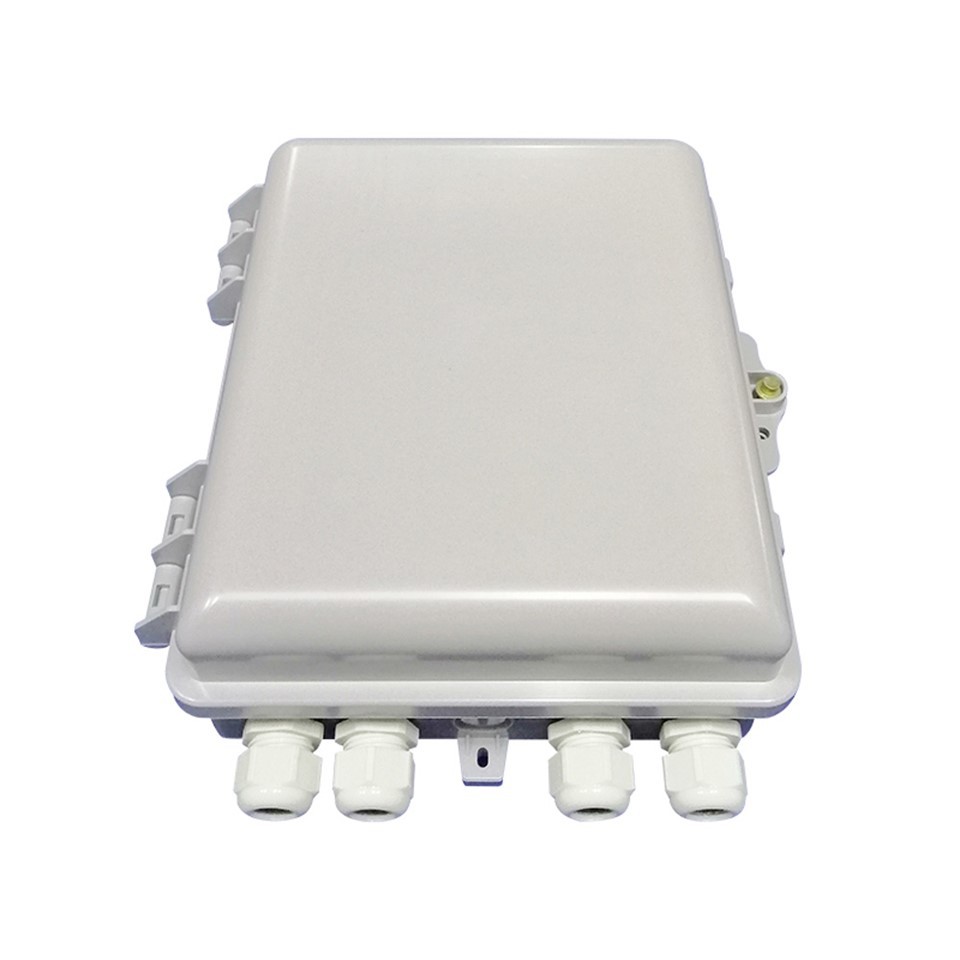
If you’re using cloud services and haven’t looked at your fiber management lately, odds are you’re leaving performance on the table, or worse, setting yourself up for avoidable outages. We work with all kinds of clients to assess their current setup, tweak their fiber management systems, and make sure their cloud connections are running as smoothly as possible. Whether you’re a small startup just moving to the cloud or a big data center looking to scale, we’ve got solutions tailored to your needs. Hit us up to chat about how we can help your fiber and cloud work better together.
OPTIC FIBER ACCESSORIES REFERENCES:
- Data Center Dynamics. (2023). Fiber Infrastructure Reliability and Downtime Cost Analysis.
- International Data Corporation (IDC). (2022). Global Fiber Management Market Growth and Enterprise Adoption Trends.
- HIPAA Journal. (2023). Compliance Requirements for Physical and Digital Data Transfer in Cloud Healthcare Systems.
- Cloud Security Alliance (CSA). (2022). Physical Security Best Practices for Cloud-Connected Data Centers.
Brolink Technologies (Dongguan) Co., Ltd.
As one of the most experienced fiber management manufacturers and suppliers in China, we offer a wide range of products with superior quality. We warmly welcome you to buy high-grade fiber management in stock here and get quotation from our factory. For price consultation, contact us.
Address: Room 201, Unit 2, Building 16, 77 Dongguan Science And Technology Park, Shilong Road, Guanlong Road, Dongcheng District,Guangdong province,China
E-mail: scwang@brolinktech.com
WebSite: https://www.brolinkopt.com/
