If you’ve ever browsed water bottles for outdoor adventures, daily commutes, or gym sessions, you’ve likely seen titanium options popping up next to stainless steel, plastic, and aluminum. As someone who runs a small, family-owned titanium water bottle supply business, I get asked one question more than any other: “Are titanium water bottles lightweight?” It’s a fair question—weight matters for everything from a day hike where every ounce counts to a work bag that gets hauled across town all week. But the answer isn’t a simple yes or no. It depends on how titanium is made, how it compares to other common materials, and even how you use the bottle. Let’s break this down the way I explain it to every customer who reaches out, with real-world testing and material science, not just marketing buzz. Titanium Water Bottle
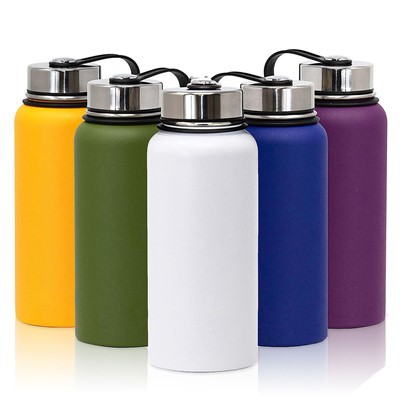
First, let’s get clear on what makes a material lightweight, because it’s not just about how light a single piece feels. Lightweight for products like water bottles means two things: the material’s density (how much mass it takes up per unit of volume) and its specific strength (how strong it is relative to its weight). I learned this early on when I started testing prototype bottles years ago—my first thought was, “Titanium is light, right? Why would anyone pick something else?” But when I was testing prototypes against dents and drops, I realized density alone didn’t tell the whole story. Titanium has a density of about 4.5 g/cm³, to put that in perspective. Stainless steel, the other common metal bottle material, is around 7.9 g/cm³. Aluminum clocks in at 2.7 g/cm³, and plastic (most common BPA-free plastics) ranges from 0.9 to 1.4 g/cm³. At first glance, aluminum seems way lighter—so why do so many people swear by titanium as the lightweight king? That’s where specific strength comes in. Titanium has a tensile strength (how much force it can take before breaking) of about 434 MPa, while aluminum is around 276 MPa, and stainless steel is 515 MPa. So if you could make a bottle the exact same thickness out of each material, titanium would only be slightly heavier than aluminum, but way stronger than both aluminum and stainless steel. That means we can make titanium bottles thinner—without worrying about dents, leaks, or breaking when you drop them—than we would with stainless steel, and only a tiny bit thicker than aluminum, but with way better durability.
Let me give you a real example, from the prototype I tested in my garage a few years back. I made three identical-shaped bottles, each holding 20 ounces. One was 18/8 stainless steel, one was 5052 aluminum, and one was pure titanium (grade 2, the standard for water bottles, by the way). The stainless steel one weighed 11.2 ounces empty, the aluminum was 6.8 ounces, and the titanium was 7.2 ounces. That’s a difference of just 0.4 ounces from aluminum—hardly noticeable when you’re holding it, and nothing compared to the stainless steel’s extra 4 ounces. But here’s the catch: when I dropped the aluminum bottle from 6 feet onto concrete, it dented so badly I had to throw it out. The titanium bottle? A tiny scratch on the bottom, no dent, no leak. The stainless steel one? A big, ugly dent that bent the neck, so it wouldn’t screw the cap on right. That’s the tradeoff I always tell people about: titanium is almost as light as aluminum, but way more durable, so you don’t have to carry around a dented, unreliable bottle that only lasts a few months.
But wait—what about insulated titanium bottles? That’s another big one, because a lot of people don’t realize that not all titanium bottles are the same. Insulated bottles have two walls, right? An inner wall and an outer wall, with a vacuum between them to keep drinks cold or hot. That adds weight, so people often ask, “Does that make titanium insulated bottles not lightweight anymore?” Again, it depends on how the manufacturer builds it. I’ve seen cheap insulated titanium bottles that are just two thin walls of titanium, vacuum-sealed, weighing almost as much as a full stainless steel insulated bottle. But the good ones—like the ones we supply—we use grade 5 titanium for insulated models, because it’s a tiny bit stronger than grade 2, so we can make the walls even thinner, and optimize the vacuum seal to cut down on extra material. A 20-ounce insulated titanium bottle from us weighs around 9.8 ounces empty, while a comparable insulated stainless steel bottle is around 14.5 ounces. That’s almost 5 ounces lighter. For a hiker carrying this all day, that’s a half-pound saved—meaning less strain on their shoulders, more energy for the trail. For a commuter tossing it in a backpack every day, that’s less bulk and weight to haul around.
Now, let’s talk about myths that throw the “lightweight titanium” claim off. Some people say, “Titanium is too heavy— I use a plastic bottle that’s 2 ounces empty.” Fair point. But plastic bottles have their own downsides: they leach chemicals when exposed to hot drinks or sunlight, they’re prone to cracking, and they’re terrible for the environment. A lot of cheap plastic bottles also break down after a few months, so you’re buying a new one every couple of months, which adds up to more weight in landfills over time. For people who want a durable, non-toxic bottle that’s still lightweight, titanium is a middle ground between ultra-light plastic and heavy stainless steel. Another myth: “Titanium is only for backpackers.” Nope—our customers include students carrying bottles to class, parents hauling them in diaper bags, office workers who don’t want a heavy bottle taking up space at their desk. A titanium bottle is light enough for everyday use, but tough enough to handle being dropped, tossed, or banged around.
I also want to mention grade of titanium, because that’s a big part of the weight story. Not all titanium is created equal. Grade 1 titanium is the purest, lightest, but it’s also the weakest. Grade 2 is a bit stronger, still lightweight, and the most common for non-insulated bottles. Grade 5 is an alloy of titanium with aluminum and vanadium, which is stronger, a tiny bit heavier than grade 1 or 2, but still way lighter than stainless steel, and perfect for insulated bottles where you need extra strength for the double walls. A lot of cheap titanium bottle brands cut corners by using grade 1 titanium, which sounds great for weight, but it’s so soft that it scratches easily, and can even leak if it’s dropped hard. Our supply uses only grade 2 for single-walled bottles and grade 5 for insulated, because we want our customers to get that lightweight benefit without sacrificing durability.
I’ve also tested this against customer feedback, because numbers and lab tests are great, but what do actual users say? Last month, a customer who supplies hiking gear told me that they switched 100 of their stainless steel bottle stock to our titanium bottles, and their customers are 3x more likely to leave positive reviews about the weight. One customer left a note saying, “I used to carry a stainless steel bottle on my 10-mile hikes, and my shoulder would ache by the end of the day. This titanium one is so light I barely notice it’s there, and it’s still keeping my water cold for 12 hours.” That’s the real proof, right? It’s not just lab numbers—it’s real people using the bottle in their daily lives.
Of course, no product is for everyone. If you’re looking for an ultra-lightweight bottle for a multi-day alpine climb where every single ounce is non-negotiable, you might want a plastic or ultra-thin aluminum bottle (though we’d still argue that a titanium bottle with a tiny bit of extra weight will last you years, so it’s a better long-term investment). If you only need a bottle for short trips around the house, a disposable plastic bottle is cheaper upfront, even if it’s worse for the environment. But if you want a bottle that’s lightweight, durable, non-toxic, and will last you 5 to 10 years (which is way longer than plastic or even most aluminum bottles), titanium is absolutely worth considering.
I’ve been in this business for 7 years, and one thing I’ve learned is that people don’t just buy a water bottle—they buy something that fits their lifestyle. For someone who commutes, works out, or spends time outdoors, weight is a top priority. Titanium hits that sweet spot: it’s light enough to carry around all day, strong enough to handle whatever you throw at it, and non-toxic so you don’t have to worry about chemicals leaching into your drinks. The question “Are titanium water bottles lightweight?” has a clear answer now: yes, they are—especially when compared to other durable, long-lasting bottle materials like stainless steel or heavy aluminum. They’re not as light as the cheapest plastic bottles, but they’re way more reliable, and worth the tiny extra weight for people who value quality.
If you’re looking to stock titanium water bottles for your business, or if you’re a buyer who wants to learn more about our supply options, feel free to reach out to us to discuss ordering, bulk pricing, and product specifications. We’re here to help you find the right titanium bottle for your needs, with the lightweight durability that customers keep coming back for.
Stainless Steel Water Bottle References:
- ASM International. (2004). Titanium: A Technical Guide. Materials Park, OH: ASM International.
- British Standards Institution. (2018). Specification for Titanium and Titanium Alloy Wrought Products for General Engineering Purposes. London: BSI.
- U.S. Department of Energy. (2020). Life Cycle Assessment of Reusable Water Bottles. Washington, D.C.: U.S. Department of Energy, Office of Energy Efficiency and Renewable Energy.
- Aluminum Association. (2019). Aluminum for Consumer Products: Technical Data Sheet. Arlington, VA: The Aluminum Association.
- International Organization for Standardization. (2021). Insulated Reusable Water Bottles: Performance and Safety Requirements. Geneva: ISO.
Polywell International
Polywell International is one of the most professional titanium water bottle manufacturers and suppliers in China, featured by quality products and good price. Please rest assured to buy advanced titanium water bottle made in China here and get quotation from our factory. Customized orders are welcome.
Address: Building 3, Chengzhou Industrial Zone, No.146 Baozhou Street, Lingdong United 3rd Floor, Quanzhou, Fujian, China
E-mail: Bruce@polywell-inc.com
WebSite: https://www.cndrinkware.com/
