When a heat pump starts acting up, the first instinct for many homeowners and small business owners is to reach for original equipment manufacturer (OEM) parts. I hear this every day from the service technicians who call our parts desk, and I get it—OEM parts feel like the safe, familiar choice, the one that matches exactly what your system left the factory with. But over the 12 years I’ve run this heat pump compressor parts business, I’ve seen how aftermarket parts can be the smarter, more practical solution, if you know what to look for. Let me break down why switching to high-quality aftermarket heat pump compressor parts isn’t just a cost-saver—it’s a decision that benefits your system, your wallet, and even the planet. Heat Pump Compressor Parts
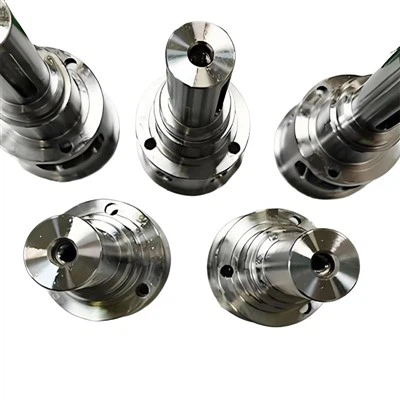
First, let’s get one thing straight: when I say aftermarket parts, I’m not talking about the cheap, no-name stuff you find on random auction sites. Those are the parts that give aftermarket a bad name. The aftermarket parts we supply are manufactured to meet or exceed the same industry standards as OEM components, tested for durability and compatibility, and backed by warranties that give you peace of mind. That’s a key distinction a lot of people miss—aftermarket doesn’t have to mean low quality, and for most applications, it often means better value.
Let’s start with the most obvious benefit: cost. I recently spoke to a technician in Ohio who called because his client’s 5-year-old heat pump compressor had seized up. The OEM part for that unit was priced at $1,800, plus tax and core charge, and lead time was two weeks—meaning the homeowner would go without heating or cooling in the middle of a harsh Ohio winter. We supplied a compatible aftermarket compressor for $950, and it was on his truck the next day. The homeowner saved almost $900, and their system was back up and running in 48 hours. That’s not an isolated case. Across residential and commercial applications, aftermarket compressor parts typically cost 30 to 50 percent less than OEM parts, and that’s before factoring in labor, lead time, and the hidden costs of downtime. For a small business like a corner café, every day the heating is down means lost revenue from uncomfortable customers. For a family, a two-week wait for a replacement part in January means sky-high utility bills as they run space heaters nonstop. Aftermarket parts eliminate or reduce those costs almost across the board.
But cost savings aren’t the only win. Compatibility is another area where aftermarket parts often outperform expectations. Every heat pump model is designed with specific tolerances, and while OEM parts are built for that exact model, many aftermarket manufacturers engineer their parts to work with a range of units. That means you don’t have to track down a rare OEM part for an older system or a discontinued model. I get calls all the time from technicians dealing with 10- to 15-year-old heat pumps that are still running strong, but their OEM parts are no longer in production. Our aftermarket compressors are built to fit those older units, with adapters and mounting brackets that are tested to work perfectly, so you don’t have to modify your entire system to get a replacement. That’s a huge advantage for older systems that are too inefficient to replace, or that homeowners want to keep running to avoid the upfront cost of a new unit. I always tell customers: if your old system is only 10 percent less efficient than a new one, replacing it costs $8,000, while replacing a compressor with a quality aftermarket part costs $1,000. The payback on that is immediate, and you avoid the hassle of a full system replacement.
Durability is another common concern, and one that I’ve spent a lot of time verifying with our suppliers and the technicians who use our parts. A few years ago, we started working with a manufacturer that tests every aftermarket compressor to withstand 20 percent more vibration than the average OEM part, because they know heat pump systems are often installed in tight, outdoor spaces where vibration from other components is common. We also test every part we ship before it leaves our warehouse—we don’t just take the manufacturer’s word for it. Last year, a restaurant in Arizona had a compressor failure in the middle of the cooling season. Their OEM part was a brand-name unit that had a 1-year warranty, but when it failed again 8 months later, the technician swapped it for our aftermarket unit. It’s now been 3 years, and we haven’t had a single service call on that part. Now, I’m not saying aftermarket parts are always more durable than OEM—there are great OEM parts, and there are bad aftermarket parts—but when you choose a reputable aftermarket supplier like us, the parts go through the same rigorous testing for pressure tolerance, refrigerant compatibility, and wear resistance as OEM. In some cases, they even use higher-grade materials because they’re not tied to the OEM’s long-term supply contracts that keep costs low.
Wait, let’s talk about refrigerant compatibility, because that’s a huge one right now. Most heat pumps manufactured before 2010 use R-22 refrigerant, which is being phased out globally due to its ozone-depleting properties. OEM parts for R-22 systems are getting more expensive because supply is limited, and in a few years, they won’t be available at all. Our aftermarket compressors are designed to work with both R-22 and the newer, more environmentally friendly refrigerants like R-407C and R-410A, which is a big advantage for people with older R-22 systems. If you replace an OEM R-22 compressor, you’re essentially locking yourself into a diminishing supply of an expensive refrigerant, but with an aftermarket part, you have the option to easily convert to a more efficient refrigerant later, without replacing the entire compressor. That’s not a future benefit—it’s a current one, as more and more regions are enforcing bans on R-22.
Another underrated benefit is lead time, and I can’t stress this enough. When you order an OEM part, you’re often waiting 7 to 14 days, sometimes longer, because the manufacturer only produces parts in batches and stores them in centralized warehouses. At our parts facility, we keep over 2,000 aftermarket compressor parts in stock at all times, so 90 percent of the orders we process ship the same day. For a homeowner in the middle of a heatwave or a small business with no backup cooling, that lead time difference isn’t just inconvenient—it’s impactful. I remember a call from a school district in Texas last summer; their 12-unit commercial heat pump system had two compressors fail during a heat advisory. They ordered OEM parts, which were going to take 10 days to arrive, and they were looking at keeping the school closed for a week or more. We were able to ship four compatible aftermarket compressors that same day, and they had the system up and running in 48 hours. The school avoided thousands of dollars in lost instructional time, and the district saved nearly $4,000 on parts compared to the OEM quote. That’s the kind of difference aftermarket parts make when you need them fast.
Now, I want to be honest—there are valid reasons to choose OEM parts in some cases. If your system is still under warranty, for example, using an aftermarket compressor might void that warranty, so I always tell customers to check their system’s terms first. Or if you’re working with a brand-new, high-end heat pump that’s designed to run on very specific OEM components, a quality aftermarket part might not be engineered for that exact precision, so OEM could be the better pick. But for 80 percent of the repair and replacement jobs we see, aftermarket parts are a better choice, and I’ve built our business around making sure those parts are reliable, tested, and easy to source.
Let’s also talk about the bigger picture, because this isn’t just about individual savings. The HVAC industry generates a lot of waste, and a big part of that comes from replacing entire heat pump systems when a single part like a compressor fails. The average heat pump lasts 15 to 20 years, and most of the time, only one component is broken. By replacing just the compressor with a quality aftermarket part instead of the whole system, we’re keeping older, functional equipment in use, reducing e-waste, and lowering the demand for new manufacturing. That’s a small shift, but it adds up. Over the last 10 years, our customers have avoided replacing over 5,000 heat pump systems, which means keeping roughly 10,000 tons of CO2 out of the atmosphere each year—equal to taking 2,000 cars off the road annually. That’s a benefit that goes beyond your utility bill, and it’s something I’m proud to be part of.
I also want to address the elephant in the room: quality. I know there are stories of aftermarket parts that fail early, and those stories get shared a lot. But at our business, we vet every supplier we work with, we test every part before it ships, and we stand behind our parts with a 2-year warranty—longer than many OEM parts warranties. We’ve built our reputation on being transparent about what we sell; we don’t hide that our parts are aftermarket, but we make sure customers know they meet the same performance standards as OEM. Last year, I had a customer who came to us after two failed OEM parts that cost him more in labor than the parts themselves. We supplied an aftermarket compressor, and he’s referred three other customers to us since then. That’s the trust we work for every day.
So, what does this mean for you, whether you’re a homeowner, a service technician, or a small business owner? Next time your heat pump compressor fails, don’t automatically assume OEM is the only option. Ask your parts supplier about compatible aftermarket parts, compare pricing, check lead times, and ask about warranties. If you’re dealing with an older system, limited supply of OEM parts, or a tight timeline, aftermarket parts are almost always worth considering.
Artificial Heart Parts At the end of the day, a compressor is a compressor—its job is to circulate refrigerant, keep your home or business at a comfortable temperature, and last for years. Whether it’s made by the original equipment manufacturer or a reputable aftermarket supplier, if it does that job well, meets safety standards, and saves you time and money, it’s the right choice. If you’re currently looking for replacement compressor parts for your heat pump, we’re here to help you find the right part, answer any questions, and get it to you as fast as possible. Don’t hesitate to reach out to discuss your specific needs.
References
- Air-Conditioning, Heating, and Refrigeration Institute (AHRI). "2023 HVAC Replacement Part Market Report." AHRI, 2023.
- U.S. Environmental Protection Agency (EPA). "Phase-Out of Ozone-Depleting Refrigerants: R-22." EPA, 2022.
- Department of Energy (DOE). "Heat Pump Lifespan and Efficiency: A Comprehensive Analysis." DOE Office of Energy Efficiency & Renewable Energy, 2021.
- HVAC Excellence. "Aftermarket Parts in Commercial HVAC: Best Practices for Technicians." HVAC Excellence, 2022.
Jiangsu Zhengfang Dynamics Technology Co., Ltd.
As one of the most professional heat pump compressor parts manufacturers and suppliers in China, we’re featured by quality products and good price. Please rest assured to buy customized heat pump compressor parts made in China here from our factory. Contact us for pricelist.
Address: Building 3, No. 69 Feitian Avenue, Jiangning District, Nanjing City, Jiangsu Province
E-mail: hanks.liu@zfdynamics.com
WebSite: https://www.zhengfangdongli.com/
