Let’s cut to the chase: if you’ve ever ordered a pallet of woven packaging bags for bulk goods, you’ve probably glanced at a spec sheet and thought, “Wait, these are listed as ‘10kg,’ but how much does the actual bag weigh itself?” I get it. As someone who’s been supplying functional woven packaging bags for 12 years now—ever since my dad and I fired up a small workshop in Ohio, after he retired from a local material science lab—that’s the question I get asked most often by farmers, construction supply managers, and even specialty chemical distributors. People treat the weight of the bag like afterthought, but it’s the single detail that derails shipping costs, product safety, and even your bottom line. Let’s break down what that number actually means, why it varies, and how we make it work for your business. Functional Woven Packaging Bags
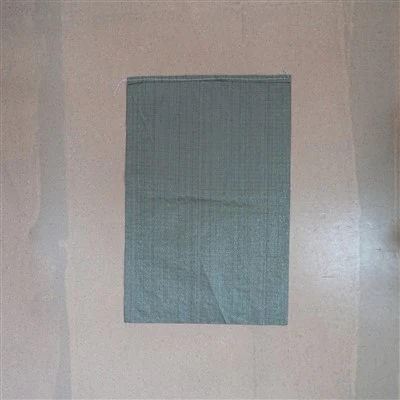
First, let’s clear up the two weights everyone mixes up: the gross weight and the tare weight. Gross weight is the full load—say, a 50lb bag of fertilizer with the bag holding all that product. Tare weight is just the empty bag itself. Most of the time, when a company lists a bag’s “weight” in specs, they’re referring to tare weight, not gross. But that’s where the confusion starts. A lot of fly-by-night suppliers will fudge that number—they might add a thin, cheap coating to make the bag feel stiffer, but that extra 0.2 ounces per bag adds up to 100lbs extra per 500-bag pallet, which means you pay more in shipping, more in fuel surcharges, and even more in storage if you’re moving multiple pallets. That’s not a small amount. We saw that happen to a small corn farmer in Iowa three years ago—he ordered 10,000 bags from a cheap online supplier, and when he went to load them, the pallets were 200lbs over their listed limit. His semi got turned away at the grain elevator, and he missed the first harvest window of the season, costing him thousands in delayed sales. Tare weight isn’t just a number—it’s a make-or-break detail for anyone moving bulk goods.
So what determines that tare weight of a functional woven packaging bag? It’s not random, and it’s not guesswork. The core of these bags is woven polypropylene (PP), right? That’s the sturdy, flexible fabric we use, not thin, flimsy grocery bag plastic. The weight of that woven fabric is measured in grams per square meter (GSM), which is the industry standard for textiles. A basic woven bag for holding animal feed might be 80 GSM, while a heavy-duty bag for construction sand is 120 GSM. But GSM isn’t the only factor—there’s also the thickness of the plastic fibers we extrude, how tight we weave them, whether we add a lining or a coating, and even the size of the bag itself. A 25lb bag for pet food is smaller than a 50lb bag for cement, so even if they use the same GSM fabric, the larger bag will weigh more. That’s why you can’t compare the weight of a 10kg small feed bag to a 10kg fertilizer bag—different sizes, different uses, different weights.
Let’s get specific about numbers, because that’s what most people care about. At our company, we tailor every bag’s tare weight to its intended use, and we post those numbers right on our product pages so there’s no confusion. For light-duty applications, like holding seed or small hardware parts, our bags weigh between 0.25oz (7g) and 0.5oz (14g) per empty bag. That’s light enough to not add much to your load, but sturdy enough to hold up to being stacked in a warehouse or dumped into a semi. For medium-duty uses, like animal feed, grain, or powdered detergent, our bags are between 0.5oz (14g) and 0.8oz (22g). These are the bags our Iowa customer initially looked at—he’d gone for a 0.5oz bag, which should have been standard, but the cheap supplier was using 0.3oz thin plastic that tore during loading. For heavy-duty, industrial applications—construction sand, salt, chemicals, or scrap metal—our bags range from 0.8oz (22g) up to 1.5oz (42g). We had a construction company in Michigan last year that needed heavy-duty bags for road salt, and they needed them to hold 80lbs each, stacked 10 high on a pallet. We used 1.2oz (34g) woven bags with a UV coating, and they didn’t have a single tear all winter, even in -20F temps.
Here’s the part most suppliers won’t tell you: you don’t always want the lightest bag. It’s a balance between weight, strength, and cost. If you skimp on tare weight to save a few cents per bag, you end up with bags that tear, leak product, or can’t support the weight of your load when stacked. A bag that’s too light might feel cheaper, but it’s a false economy. We did a project a few years ago with a specialty chemical company that needed bags for powdered fertilizer that could hold 50lbs, resist UV light, and not leach chemicals. The customer initially asked for the lightest bag possible, to save on shipping. We ran a test: their old bags (0.4oz) tore 12% of the time during transport, leading to 1,000lbs of lost product per month. The medium-duty bag we suggested (0.7oz) had a tear rate of less than 0.5%, and the extra tare weight added 75lbs per pallet. But since the tear rate was so low, they saved $1,200 a month on lost product, and even paid less in overall shipping because they could fit more pallets on a semi (since they weren’t carrying extra bags or half-spoiled product). That’s the math no one shows you.
Another factor that impacts tare weight: additives and coatings. A lot of functional woven packaging bags need extra properties—UV resistance for outdoor use, moisture barriers for grain or chemicals, antistatic coatings for fine powders that could spark, or food-grade lining for products like flour or pet food. Each of these adds a little weight. A basic woven bag might be 0.5oz, add a moisture barrier, and that bumps it up to 0.6oz. Add a UV coating for agricultural use, and it’s 0.7oz. That’s not a bad thing—it’s a feature, not a flaw. Those coatings are what make the bag functional, not just a random piece of plastic. We never cut corners on additives because we’ve seen what happens when a bag fails: a farmer loses his crop, a chemical plant has a safety hazard, a construction company has to shut down a road because sand is leaking all over the highway.
Wait, what about recycled PP? A lot of our customers ask about that, because sustainability is a big deal now. We use 30% post-consumer recycled PP in most of our bags, and that can change the tare weight slightly, depending on the grade of recycled plastic. High-grade recycled PP is almost the same weight as virgin PP, so the difference is negligible—usually less than 0.05oz per bag. Lower-grade recycled PP can be a little heavier, because it has more impurities, but we only use high-grade recycled plastic because it doesn’t compromise the strength of the bag. Our customers that prioritize sustainability tell us that the small weight difference is worth it, because it aligns with their brand’s values, and the bags still perform exactly like our virgin PP lines.
I’ve been in this business long enough to know that there’s no one-size-fits-all answer to “what is the weight of functional woven packaging bags?” It’s not a single number you can pull off a shelf. It depends on what you’re putting in the bag, how you’re transporting it, how you’re storing it, and what extra features you need. That’s why we work one-on-one with every customer, not just send them a catalog with generic specs. Last month, a small startup that sells compostable potting soil reached out to us. They needed bags that could hold 10lbs of soil, be compostable themselves (wait, no—wait, functional woven packaging bags that are compostable, not the soil. Right.) They also needed the bags to print their custom logo, hold up in warm warehouses, and not leach any chemicals into the soil. We tested three different bag weights before we found the right one: 0.45oz, woven with food-grade, UV-stabilized PP, a thin moisture barrier to keep the soil from getting moldy, and a custom print that wouldn’t fade in the sun. That bag was lighter than their initial request, stronger than the cheap bags they’d been using, and only cost a penny more per bag. That’s the kind of detail that matters.
Too often, functional packaging is treated like an afterthought—something you buy the cheapest version of so you can get on with the rest of your business. But the bag is the first line of defense for your product. If your product gets ruined because a bag tears, or you pay too much in shipping because the bag is heavier than it needs to be, that’s money out of your pocket. The tare weight is the starting point, not the end goal. It’s a balance between strength, cost, weight, and functionality.
At our company, we’ve spent 12 years refining that balance. We don’t make bags that are heavier than they need to be, and we don’t make bags that are lighter than they can safely be. Every bag we leave our workshop has a tare weight that’s tested, documented, and transparent—no hidden coatings, no fudged numbers, no surprises. We work with small family farms, large industrial distributors, and every business in between, because we know that each of you has unique needs.
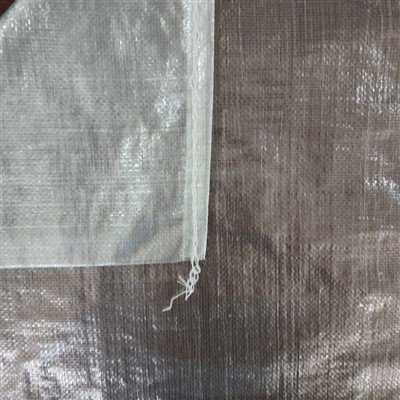
If you’re tired of working with suppliers who give you vague specs or cut corners to save a buck, we’re here to help. We can walk you through the right tare weight for your product, run tests if you need them, and give you a quote that’s transparent from start to finish. Stop guessing about your packaging weight—let’s talk, and we’ll find the right solution for your business. Don’t hesitate to reach out for a custom quote or to ask any questions you have about our functional woven packaging bags.
Functional Woven Packaging Bags References:
- American Society for Testing and Materials. (2021). Standard Test Method for Tare Weight and Tensile Strength of Woven Polypropylene Packaging Bags. ASTM International.
- National Agri-Marketing Association. (2022). Bulk Packaging Best Practices for Agricultural Commodities. NAMA Research Report.
- Packaging Association of North America. (2023). Functional Packaging Material Specifications and Performance Standards. PANA Technical Bulletin.
- International Organization for Standardization. (2020). Packaging – Flexible Woven Plastic Sacks – Test Methods. ISO 17599:2020.
Jining Shunxing Plastics Co., Ltd.
Jining Shunxing Plastics Co., Ltd. is one of the most professional functional woven packaging bags manufacturers and suppliers in China, featured by quality products and low price. Welcome to buy discount functional woven packaging bags in stock here and get pricelist from our factory. We also accept customized orders.
Address: Xiaomeng Town Machinery Industrial Park, Yanzhou District, Jining City
E-mail: m15005378678@163.com
WebSite: https://www.sxwovenbag.com/
