When I first started answering questions from warehouse managers about our loading and unloading robots, the most frequent question wasn’t about speed, or programming, or how easy they are to integrate with existing inventory systems. It was always, “What’s the maximum weight your robot can handle?” It makes total sense, right? When you’re moving pallets of raw materials, finished goods, or heavy crates of supplies, the last thing you want is a machine that can’t keep up with your daily workflow, or worse, breaks down mid-load because it was pushed past its limits. For years, I’ve stood in our testing bays watching our engineers run through weight tests, tweak load distribution algorithms, and work side-by-side with clients to figure out exactly what their operations need. Today, I want to break down that question, not just with numbers, but with the real-world context that makes a robot’s maximum load mean something. Loading and Unloading Robot
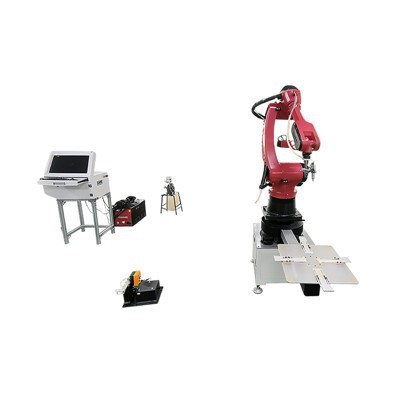
First, let’s get one thing straight: the maximum weight a loading and unloading robot can handle isn’t a single number you pull out of a product brochure and call it a day. We don’t just test a robot with a 2,000-pound pallet and call it done—because that 2,000 pounds might be fine for an hour, but if the robot is moving that load 50 times a day, over uneven warehouse floors, through dock doors that have slight height variations, or stacking it on a truck that’s bouncing a little as it pulls away, that number changes. That’s why our team spends hundreds of hours testing each robot model across three key variables: the payload capacity of the robot’s mechanical arm, the stability of the entire unit (including the base, wheels, and support structure), and the operational constraints of the job it’s being built for.
Let’s start with the mechanical side, because that’s the most visible part. Our entry-level loading and unloading robot, the one we designed for small to mid-sized warehouses that handle retail or light manufacturing goods, has a standard maximum payload of 1,500 pounds. This is the robot we’ve seen used at craft breweries moving barrels, at small distribution centers sending out online orders, and at auto parts shops transporting crates of engine components. We tested this model for six months before launching it, running it 12 hours a day, loading and unloading 1,500-pound pallets onto standard 53-foot trucks, and even pushing it to 1,600 pounds on low-stakes test runs. What we found is that this number isn’t arbitrary—it’s the weight the robot can handle for thousands of cycles without putting extra stress on its arm joints, hydraulic systems, or wheel motors. Push it beyond that, and you start to see wear and tear that leads to higher maintenance costs, longer downtime, and more frequent repairs. That’s the last thing any warehouse manager wants, right?
But here’s where it gets interesting: for larger operations, ones that move heavy construction materials, industrial equipment, or bulk food products, we have a heavy-duty model with a maximum payload of 4,500 pounds. This robot is built for the big jobs. Its arm has reinforced steel joints, a hydraulic system with double the pressure of our entry-level model, and a base that’s 30% heavier to keep it stable when moving heavy loads. We’ve deployed this model at building supply warehouses, where it loads pallets of cinder block, steel rods, and pre-cut lumber, and at food distribution centers that handle full pallets of canned goods or bulk grain. A few months back, we worked with a landscaping supply company that needed to move pallets of river rock and mulch—each pallet weighing almost 4,000 pounds—and they were nervous about whether the heavy-duty model could keep up. We did a two-week trial, running the robot 10 hours a day, and at the end, their maintenance team told us they hadn’t had a single issue. That’s the proof, right? When you test a robot in the exact environment it’s going to work in, the maximum weight isn’t just a number—it’s a solution.
But even with these two standard models, we know that every operation is different. A warehouse might need to move a 2,000-pound pallet of paper products one week, and a 3,000-pound pallet of metal piping the next. Or they might have a truck door that’s only 8 feet wide, so they need a robot that’s narrow enough to fit, even if that means adjusting its maximum payload slightly. That’s why our team doesn’t just sell you a robot and walk away—we do a site assessment first. We’ll come to your facility, measure your dock doors, check the floor flatness, look at the types of loads you move, and even shadow your current team for a day to see how they load and unload trucks. Last year, we worked with a manufacturer of farm equipment that had a unique problem: they needed to move pallets of new lawnmowers, each weighing around 2,200 pounds, but their loading bays had low ceilings, so they couldn’t use a robot with a tall arm. We customized an entry-level robot, reinforced its arm just enough to handle the extra 300 pounds (taking it from 1,500 to 2,200 pounds), shortened its arm to fit under the ceiling, and built a custom pallet grip that was sized for their specific pallets. That’s the part no one talks about in product brochures—maximum payload isn’t a fixed limit, it’s something we can adjust when we understand your needs.
Now, let’s talk about the things that affect a robot’s ability to actually handle that maximum weight, because this is where a lot of people get tripped up. First, load distribution. If you have a pallet that’s lopsided—like one side has 100 more pounds of boxes than the other—your robot’s grip has to work harder to keep the load balanced, which means it can’t handle the same maximum weight it would for a evenly distributed load. We always teach our clients to train their teams to stack pallets level, because that not only makes the robot work better, it also extends the life of the robot. Second, the environment. If your warehouse has uneven floors, potholes, or areas that are sloped, the robot has to use more power to move a heavy load, and that extra power can put stress on its components. We recommend regular floor maintenance for anyone using our heavy-duty models, because even a small 1-inch dip in the floor can cause the robot to jolt slightly when moving a 4,000-pound load, leading to more wear over time. Third, speed. If you’re loading a truck in 2 minutes instead of 5, the robot has to move faster, which means it needs more force to stop and start with a heavy load. We find that most of our clients run their robots at a speed that balances efficiency with longevity, and that speed lets them hit the maximum payload consistently.
I also want to address a common misconception: some people think that if a robot has a maximum payload of X pounds, it can handle that load forever. That’s not true. Just like a truck has a maximum towing capacity that depends on how often you tow, the terrain, and the weather, a loading and unloading robot’s maximum weight is a long-term average, not a short-term peak. Our test data shows that our entry-level model can handle 1,500 pounds for 8 hours a day, 5 days a week, for 5 years, with minimal maintenance. If you run it 24 hours a day, that number drops to 1,500 pounds for 3 years, and if you push it to 1,600 pounds, that lifespan drops to 2 years. That’s why we always explain that maximum weight is a balance between what you need now, what you’ll need in 2 years when your business grows, and what you can afford in maintenance and repairs.
Over the years, I’ve seen so many clients make the mistake of buying the biggest robot they can afford, only to find that it’s too big for their docks, too powerful for their daily workload, and costs them more in electricity and maintenance than they save in labor. Or they buy a robot that’s too small, and end up having to replace it in a year because it can’t keep up with their growing inventory. That’s why our approach is always to listen first, then design a solution. A few months ago, a small clothing distribution center came to us saying they needed a robot that could handle 2,000-pound pallets of folded apparel. They thought they needed the heavy-duty model, but when we did their site assessment, we found that they only needed to move those pallets once a day, and their dock doors were too narrow for the heavy-duty model. We customized our entry-level model, reinforced its base slightly, adjusted its arm to handle the 2,000-pound pallets, and it fit perfectly through their dock doors. They saved 30% on the cost of the heavy-duty model, and their robot is working better than they expected.
Another thing to consider when thinking about maximum weight is safety. Our robots are all built with load sensors, so if a pallet is too heavy, the robot will stop and alert the operator, instead of trying to lift it and tipping over or breaking a component. That’s a non-negotiable for us. We’ve had clients try to override these safety features, and every time, it leads to a problem. Once, a manager at a construction supply site tried to load a 5,000-pound pallet onto our heavy-duty robot, even though it’s maximum payload is 4,500 pounds. The load sensors detected the extra weight, and the robot stopped, but the manager bypassed the sensors, and the robot’s arm bent slightly. We had to repair it, and it was out of service for three days. That’s a $10,000 repair, all because someone tried to push past the maximum weight limit. So as much as we talk about adjustable payloads, we never recommend overridding the safety features, because it’s not just about the robot—it’s about the safety of your team, too.
So, putting all this together, when someone asks, “What’s the maximum weight your loading and unloading robot can handle?” the answer isn’t a single number. It’s “It depends on your pallets, your facility, your workflow, and your long-term goals.” If you’re a small retail distribution center, our entry-level model can handle up to 1,500 pounds, with custom options up to 2,200 pounds. If you’re a large construction or food distribution operation, our heavy-duty model handles up to 4,500 pounds, with custom reinforced models for even heavier loads if needed. But the only way to know for sure is to talk to someone who understands your business, and who has tested their robots in environments like yours.
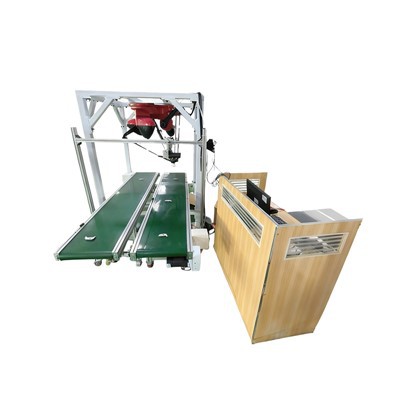
At the end of the day, our job as a loading and unloading robot supplier isn’t just to sell a machine that can lift a certain number of pounds. It’s to give you a solution that fits your team, your workflow, and your budget, so you can stop worrying about manually loading and unloading heavy pallets, and start focusing on growing your business. If you’re tired of workers getting injured lifting heavy loads, or of inefficient loading times that hold up your shipping schedule, it’s time to talk to someone who knows exactly how to size a robot for your needs. We can walk you through our test data, show you case studies of clients just like you, and help you find the perfect robot that handles exactly the weight you need, without any extra costs or headaches. Don’t let another day of manual labor slow your business down—reach out to us today to talk through your needs and find the right loading and unloading robot for your operation.
Stamping Robot References
- International Organization for Standardization (ISO). 2019. ISO 10218-1: Robots and robotic devices – Safety requirements for industrial robots – Part 1: Robots. Geneva, Switzerland: ISO.
- American Society of Mechanical Engineers (ASME). 2021. ASME B30.20: Below-the-Hoisting Lifting Devices. New York, NY: ASME.
- Warehouse Education and Research Council (WERC). 2022. “Robotic Payload Standards for Loading and Unloading Operations.” WERC Journal of Supply Chain Innovation, 14(2): 45-62.
- National Institute for Occupational Safety and Health (NIOSH). 2020. “Musculoskeletal Disorders in Warehouse Workers: Impact of Manual Lifting and Automated Load Handling.” DHHS (NIOSH) Publication No. 2020-112.
Dongguan Chuanglida Intelligent Equipments Co., Ltd.
As one of the most professional loading and unloading robot manufacturers and suppliers in China, we also support customized service. Please feel free to buy discount loading and unloading robot in stock here from our factory. For price consultation, contact us.
Address: Room 201, Building 2, No. 61, Shachang 1st Road, Dalang Town, Dongguan City, Guangdong Province
E-mail: haoguangli001@outlook.com
WebSite: https://www.boruntestech.com/
