Hey folks, let’s cut to the chase—if you’ve ever wondered what happens the second you flip a light switch, your circuit breaker box is the unsung hero holding that whole thing together. I’ve been in the game as a circuit breaker box supplier for over 12 years, and let me tell you, most homeowners don’t realize this little metal box in your basement or garage isn’t just a fancy storage bin for wires. It’s the central boss that keeps every other electrical component in your house from either working like a charm or turning into a fire hazard. Today, I’m breaking down exactly how this bad boy interacts with everything from your fridge to your AC, no jargon, promise. Circuit Breaker Box

First off, let’s set the scene: when the power company sends electricity down the street lines, that stuff hits your home’s main service line first. Before it even gets close to any of your stuff, it has to go through your circuit breaker box—yep, that’s the main disconnect breaker at the very top you might’ve seen labeled “200A” or something. That’s your first line of defense. Without that, every single outlet, appliance, and light in your house would be on the same 240-volt loop, which is like trying to feed a whole family with one turkey sandwich—impossible, and you’d end up with a huge mess.
Now, let’s talk about how it talks to your branch circuits, because that’s where all the individual stuff plugs in. The main breaker splits the incoming power into smaller, dedicated circuits, right? Each of those gets its own tiny circuit breaker in the box—usually 15 or 20 amps for regular outlets, 30 or 50 for big stuff like dryers. Here’s the key part: every time you plug in a toaster, a lamp, or your TV, it’s sending a current back through that outlet, through the wall wires, and straight to that matching breaker in your box. That’s how the breaker box “knows” how much power every single part of your house is using at any given time. I’ve seen so many homeowners overload their kitchen circuits—running a microwave, a coffee maker, and a air fryer all on the same 15A outlet—and that breaker in the box will trip before the wires in your walls melt. It’s like a built-in bodyguard, and that’s the first big interaction.
Wait, let’s not forget the big boys—your 240-volt appliances, like your electric oven, dryer, or central AC. Those need way more power than a regular outlet can handle, so the breaker box has special double-pole breakers for those. Those breakers take two hot wires (instead of one) from the main line, so it pushes 240 volts instead of 120. That’s why when you look at your dryer outlet, there are four slots instead of three. The breaker box matches the size of the breaker to the appliance’s needs—no random mixing here, because if you put a 50A breaker for your AC on a circuit that can only handle 30A, you’re frying the AC and risking a fire before you even notice. As a supplier, we always emphasize this to our clients when they’re upgrading panels—matching breakers to the load is non-negotiable.
Now, what about those other components that don’t just plug in, like your whole-home surge protector? Oh, that’s another big interaction. A lot of newer breaker boxes have a built-in surge protector, and even if yours doesn’t, you can add a whole-house surge protector that mounts right next to the breaker box. Here’s how that works: lightning hits a power line down the street, it sends a huge spike of electricity through the lines. If that spike makes it past your meter, it hits the breaker box first. The surge protector inside the box kicks in instantly, diverting that extra voltage straight to the ground (we call that a neutral wire or ground bar in the box) so it never gets to your expensive TV, laptop, or gaming system. I can’t tell you how many times we’ve gotten calls from people who skipped the whole-house surge and had every device in their living room fried during a storm—they wish they’d invested in adding that to their breaker box setup.
Wait, let’s get to the ground and neutral bars in the breaker box, because those are the unsung connectors that tie everything together. You’ve got a big metal bar in the box: the neutral bar is for the return current, and the ground bar is for safety. Every outlet, every appliance, every light fixture has a neutral wire and a ground wire that run all the way back to the breaker box. The ground bar is bolted to the box’s metal casing, and that ties to your home’s grounding rod outside—so if a wire frays and touches the metal frame of your fridge, that current goes straight to the ground instead of zapping someone. The breaker box is the only place where these wires all meet, so without it, there’s no safe path for that current to go. I always say, if the breaker box is the heart of your home’s electrical system, the ground and neutral bars are the veins pumping that safe current to every part.
Let’s talk about a common scenario most people have experienced: when you’re in the middle of cooking, and all of a sudden your kitchen goes dark. That’s the breaker box interacting with your kitchen outlets. You tripped that 15A breaker—probably because you had the toaster, microwave, and Instant Pot all running at the same time. The breaker in the box detects that the current is higher than the circuit is rated for, so it flips to the “off” position, cutting power to that kitchen circuit until you reset it. That’s not a bug—that’s exactly what it’s supposed to do. I’ve had a few clients call me panicking thinking their house is going to burn down because a breaker tripped, and I’m like, “No, that’s your breaker box doing its job.” The only time you should worry is if breakers are tripping for no reason— that means there’s a bad interaction somewhere, like a faulty wire or a dying appliance, and you need to check it ASAP.
Now, what about when you upgrade your electrical panel? A lot of people think “breaker box” is just the old metal thing in the basement, but newer panels (which is what we supply) have better interactions with solar systems, generators, and EV chargers. Wait, EV chargers—if you have an electric car, you need a dedicated 40A to 100A circuit running from the breaker box straight to your garage. That’s a specialized interaction: the breaker box has to have enough space for that new breaker, and it has to be sized to handle the charger’s power draw without overloading the whole panel. Same with solar: when your solar panels send power back to the grid (that’s net metering), it has to pass through your breaker box first. The breaker box makes sure that power doesn’t flow back into the grid when the utility company is working on the lines— that’s called anti-islanding protection, and it’s built right into modern breakers. I can’t stress enough how important that is for solar setups—using an old, undersized breaker box can mess up your solar system’s safety and efficiency.
Wait, let’s clear up a myth I hear all the time: some people think the breaker box is just a place to hold breakers, but no—each component in your house is wired to the box, so every interaction is two-way. Your HVAC system: when your thermostat tells your AC to turn on, it sends a signal that goes through the wall wires to the breaker box, which sends power to that dedicated AC circuit. If the AC has a problem, it might draw too much current, and the breaker trips, shutting off power before the AC itself gets damaged. Same with your water heater—if the heating element goes bad and starts drawing too much power, the breaker box is the one that catches it.
Now, let’s talk about what happens when that interaction goes wrong. If your breaker box is old (like pre-2000), it might not have the right ground bars, or the breakers might be loose, which means they won’t trip when they’re supposed to. That’s a huge fire risk. I’ve had clients come to us because their old panel was causing their outlets to spark, and fixing it meant replacing the whole breaker box and making sure all the new wires interacted correctly with every appliance. The worst part? You might not even notice a problem until something goes wrong— that’s why checking your breaker box every few years (or upgrading it if it’s over 20 years old) is such a big deal.
Here’s the thing I always tell my clients: your circuit breaker box isn’t just a box of switches. It’s the central coordinator for every single electrical thing in your home. It splits power, keeps you safe, protects your stuff, and even works with new tech like solar and EVs. I’ve been supplying breaker boxes for years, and I’ve seen firsthand how a good panel makes every part of a house work better—no more tripping breakers at the worst times, no more worrying about storms frying your devices, no more dealing with faulty electrical connections that put your family at risk.
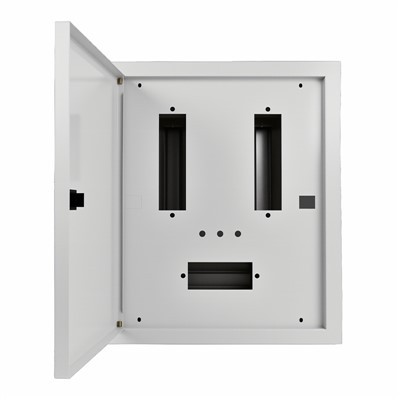
If you’re thinking about upgrading your breaker box, or you have questions about how your current one interacts with your appliances, solar, or EV charger, I’m here to help. Don’t wait until a trip or a fire scare makes you call—reach out anytime to chat about your specific needs. We work with homeowners, electricians, and contractors to make sure every panel we supply is set up to interact perfectly with every component in your house. Whether you’re just replacing an old breaker or building a new home from scratch, we’ve got you covered.
GGD Cabinet References:
- U.S. Consumer Product Safety Commission. "Electrical Safety in the Home." 2022.
- National Electrical Code (NEC). Article 230: Service Equipment, 2020 Edition.
- Electrical Safety Foundation International. "Whole-Home Surge Protection Guide." 2021.
- Institute of Electrical and Electronics Engineers (IEEE). "Grounding and Bonding for Residential Electrical Systems." 2019.
Shandong Qinghua Yike Electric Co., Ltd.
As one of the most experienced circuit breaker box manufacturers in China, we also support customized service. We warmly welcome you to buy durable circuit breaker box for sale here from our factory. If you have any enquiry about cooperation, please feel free to email us.
Address: No. 378 Taozhuang Village, Zaoyuan Town, Lanshan District, Linyi City, Shandong Province
E-mail: admin@sd-qhyk.com
WebSite: https://www.qhecobox.com/
