If you’ve ever walked past a construction site, sipped from a plastic water bottle, or seen a farm irrigating crops, chances are you’ve interacted with HDPE (high-density polyethylene) pipes. And if you’re in the business of making those pipes, you know the HDPE pipe machine’s heating system is way more than just a bunch of hot wires. It’s the unsung hero that turns raw plastic pellets into the durable, flexible pipes we rely on every single day. As someone who’s been supplying these machines for years, I get asked all the time: “Wait, what even is that heating system, and why does it matter that much?” Let’s break it down, no super jargon, just real talk about how it works and why it’s non-negotiable. HDPE Pipe Machine

First, let’s start with the basics: HDPE is a thermoplastic, meaning it melts when heated and re-solidifies when cooled—no chemical change, just physical. That’s why it’s perfect for pipes, but it also means you have to get the heating just right. Too hot, and the plastic burns, gets crumbly, or releases yucky fumes that mess up the pipe’s strength. Too cold, and it doesn’t melt evenly, leaving gaps that’ll leak under pressure. The heating system’s whole job is to nail that “just right” temperature, and it’s not a one-size-fits-all setup, either.
Most HDPE pipe machines use a few main heating zones, right? Not just one big heater along the whole barrel. Let’s talk about the extruder first— that’s the part where the pellets get pushed and melted. The extruder has a long, metal barrel (usually steel, since it can handle high heat and pressure) and a screw inside that twists like a giant corkscrew. The heating system here is split into sections along the barrel: the feed zone, transition zone, and metering zone. The feed zone is where the raw pellets drop in—this one’s kept a little cooler, around 150–180°C, so the pellets don’t stick together or melt before they even get into the screw (clumpy pellets = bad, uneven flow). Then the transition zone heats up more, to like 200–250°C, which is where the pellets start turning into a gooey, melted plastic. Finally, the metering zone is the hottest part, up to 260–280°C, to get the plastic nice and uniform, so it’s ready to be pushed out the die.
Wait, how do they heat those zones, anyway? Most modern machines use cartridge heaters—those little cylindrical, electric heaters that slide right into holes drilled into the barrel. They’re compact, put out consistent heat, and easy to replace if one burns out. Some older machines might use band heaters that wrap around the barrel, but cartridge heaters are way more efficient, since they transfer heat straight into the metal instead of losing it to the air around the barrel. Oh, and there are also heaters on the die— that’s the shaped part at the end of the extruder that gives the melted plastic its pipe shape. The die needs to be heated too, usually to 220–260°C, to keep the plastic soft enough to flow through the die’s gaps and not cool down too fast, which would cause warping or uneven wall thickness.
But here’s the thing: heating isn’t just cranking up the thermostats. You need to control it, or you’re just guessing. That’s where temperature controllers come in— these are little (or not-so-little) boxes that monitor each zone’s temp with sensors (usually thermocouples, which are those small metal probes that stick into the barrel or die) and adjust the heaters accordingly. Like, if the metering zone gets too hot, the controller turns the heater off for a second, waits till it cools back down, then turns it back on. Old machines might have basic on/off controls, which are okay for small batches, but modern ones use PID (proportional-integral-derivative) controllers that are way more precise—they keep the temp within ±1°C, which is huge for consistent pipe quality. I can’t tell you how many times a customer’s old machine had wonky temp control that made their pipes leak, just because a zone was 5°C too hot. That’s the kind of small issue that costs you big time in warranty claims.
Also, don’t sleep on the cooling parts that go with the heating system. Heating can’t happen without cooling to balance it, right? After the extruder pushes the melted plastic through the die, the pipe is still super soft, so you need to cool it fast enough to hold its shape but not so fast that it creates stress cracks. Most lines use vacuum cooling first—there’s a big water-cooled tank right after the die that pulls the pipe tight against the inner wall of the tank with suction, while cool water circulates around the outside to lower the temp quickly. Some machines also use air cooling for the outer layer first, but water cooling is the standard for most HDPE pipes, since it’s more efficient. The heating system works hand in hand with this cooling system, because if the heating is off, the pipe won’t set evenly, and cooling can’t fix that.
Wait, why does this even matter for you if you’re buying an HDPE pipe machine? Let’s put this in real terms. If you’re making small-diameter pipes, like 2-inch pipes for residential plumbing, you can get away with a simpler heating system, maybe with fewer zones and basic temperature control. But if you’re making large-diameter pipes, like 36-inch pipes for municipal water lines or oil and gas pipelines, you need a way more advanced heating system. Large extruders have longer barrels, so more heating zones, more powerful heaters, and way better temp control. If the heating is inconsistent across a 10-foot barrel, the plastic coming out is uneven, so your pipe walls are thicker in some spots and thinner in others. Thinner walls can burst under pressure, and that’s a lawsuit waiting to happen for a pipe manufacturer.
I’ve seen so many new pipe makers cut corners on the heating system to save a few bucks on a machine. They buy a cheap machine with only 3 heating zones instead of 6, or a basic on/off temp controller instead of a PID, and within a year, they’re replacing barrels, reworking pipes, and losing customers. The heating system is the core of the extruder—if it’s not reliable, the whole machine is useless. That’s why when we build our machines, we don’t skimp on the heating components. We use high-quality cartridge heaters from trusted suppliers, PID controllers that have user-friendly interfaces (so you can adjust zones on the fly without a engineering degree), and extra sensors to make sure each zone is spot-on. We even have a feature that alerts you if a heater is failing, so you can replace it before it messes up your production run.
Another thing people don’t talk about: energy efficiency in the heating system. Heating can be one of the biggest power hogs in a pipe production line. Bad heating systems waste tons of energy because they lose heat to the surrounding air, or they cycle on and off too much (which is bad for the heaters and the temp control). Modern heating systems use insulated barrel jackets—those thick, fiberglass or ceramic wraps that go around the barrel, keeping the heat inside where it belongs. That not only saves you money on electricity bills, but it also stabilizes the temp of each zone, since less heat is escaping. Our machines have insulated jackets as standard, which our customers tell us cuts their energy costs by like 15-20%—that’s a huge win when you’re running 24/7, 300 days a year.
Wait, let’s address a common misconception: some people think the heating is all electrical, but there are also some machines that use gas heating for larger extruders, since gas can put out more heat faster. But for most medium-sized HDPE pipe machines, electric cartridge heaters are still the go-to, because they’re more precise and easier to control. Gas heating is more for super big, industrial lines that make pipes over 48 inches, but even then, a lot of those are switching to electric because of the better control. And don’t get me started on induction heating— that’s a newer tech where you use electromagnetic fields to heat the barrel directly, no wires or cartridges. It’s super efficient, way faster at heating up, and lasts longer, but it’s still more expensive, so it’s not standard yet. We’re testing it out for our next-gen machines, though—exciting stuff.
Let’s also talk about how the heating system works with the screw design. The screw inside the extruder isn’t just a random twisted piece of metal—its pitch and flight depth are tailored to work with the heating zones. If the heating is too hot in the metering zone, the plastic gets too runny, and the screw can’t push it evenly. If the feed zone is too cold, the pellets don’t feed into the screw properly, causing gaps in production that slow you down. So the heating system and the screw are a matched set—you can’t have a good one without the other. That’s why when we build our complete pipe lines, we don’t just sell a heater and a screw separately; we design them together to work seamlessly.
What about troubleshooting common heating issues? Let’s say you’re running a machine and notice that the pipe has uneven wall thickness, or it’s got dark spots (that’s burnt plastic). First thing to check is the temperature readings on each zone—one might be off by 20°C, and the controller isn’t catching it. Or a cartridge heater might be burned out, so that zone isn’t heating at all. Another common issue is thermocouples getting dirty or worn out, so they give bad temp readings, making the controller adjust the heaters wrong. We always train our customers on how to check these things, and our tech support team is on call 24/7 if they have a problem. No one wants to be stuck with a broken machine that’s costing them thousands in lost production time.
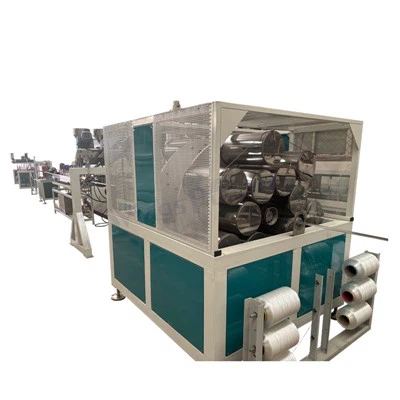
At the end of the day, the heating system of an HDPE pipe machine is the backbone of the entire process. It’s what turns cheap plastic pellets into a product that can hold up under decades of pressure, extreme temperatures, and harsh conditions. If you’re in the market for a pipe machine, don’t just look at the price or the output speed—ask about the heating system. How many zones does it have? What kind of controllers? Is it energy efficient? Will it work for the size of pipes you want to make? Those are the questions that will make or break your business, not just today, but for years down the line.
HDPE Pipe Machine If you’re ready to talk about which HDPE pipe machine is right for your needs, whether you’re a small startup just getting into pipe manufacturing or a large operation looking to upgrade your line, reach out. We don’t do pushy sales stuff—we just give honest info on what works, what doesn’t, and why our machines’ heating systems are built to keep you running smoothly, consistently, and profitably. No hidden fees, no vague specs, just real solutions for real pipe makers.
References
- PE Pipe Systems: Manufacturing, Materials, and Applications, McGraw-Hill, 2018.
- Plastics Extrusion Technology, 2nd Edition, Carl Hanser Verlag, 2020.
- “Temperature Control in HDPE Extrusion,” Journal of Plastic Film & Sheeting, Vol. 35, No. 4, 2019, pp. 289-307.
Qingdao Wings Plastic Technology Co., Ltd.
As one of the most experienced hdpe pipe machine manufacturers and suppliers in China, we also support customized service. Please feel free to buy durable hdpe pipe machine made in China here from our factory. For price consultation, contact us.
Address: C02 Of Anshengyi Road, No.2 Fuan Industry Zone,Jiaodong Town, Jiaozhou City, Qingdao City, Shandong Province,China
E-mail: kelly@wingsplastic.com
WebSite: https://www.wingsextruder.com/
