Hey there! I’m working as a supplier of titanium plates, and I often get asked this question: Can titanium plates be coated with other materials? Well, let’s dive right into this topic. Titanium Plates
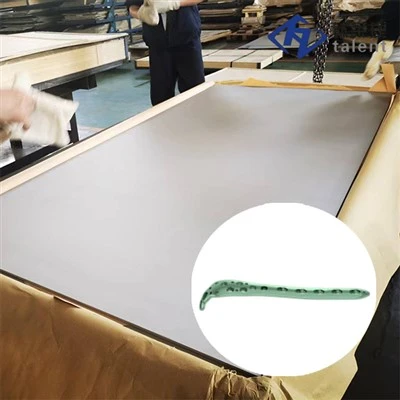
First off, let’s talk a bit about titanium. Titanium is an amazing metal. It’s super strong but lightweight at the same time. It also has great corrosion resistance, which makes it a top – pick in many industries like aerospace, medical, and marine. But there are times when we might want to coat it with other materials to enhance its properties even further.
One of the main reasons we’d consider coating titanium plates is to improve their wear resistance. In some high – friction applications, like in machinery parts, the titanium plate can wear out over time. By coating it with a hard material, like tungsten carbide, we can make it last much longer. Tungsten carbide is incredibly hard, and when applied as a coating on a titanium plate, it acts as a protective shield, reducing the rate of wear and tear.
Another reason is to enhance its corrosion resistance even more. While titanium already has good corrosion resistance, in some extremely harsh environments, like in chemical processing plants where there are aggressive chemicals, a coating can provide an extra layer of protection. For example, a ceramic coating can form a dense barrier that prevents the corrosive agents from reaching the titanium surface. The ceramic has excellent chemical stability and can withstand contact with strong acids and alkalis.
Now, let’s get into how we can actually coat titanium plates. There are several methods out there. One common method is physical vapor deposition (PVD). In PVD, the coating material is vaporized in a vacuum chamber and then deposited onto the titanium plate surface. This method allows for very precise control over the coating thickness and composition. The coatings produced by PVD are usually very uniform and have good adhesion to the titanium substrate.
Another method is thermal spraying. In thermal spraying, the coating material is heated to a molten or semi – molten state and then sprayed onto the titanium plate. This can be done using different heat sources, like a flame or a plasma arc. Thermal spraying is a relatively quick and cost – effective way to apply thick coatings. However, the adhesion of the coating might not be as good as in PVD, and there could be some porosity in the coating.
But it’s not all smooth sailing when it comes to coating titanium plates. There are some challenges we need to deal with. One big challenge is the difference in the thermal expansion coefficients between titanium and the coating material. When the temperature changes, the titanium and the coating will expand or contract at different rates. This can cause stress at the interface between the coating and the titanium, which might lead to the coating cracking or delaminating over time.
To overcome this, we need to carefully select the coating material and the coating process. We can also use intermediate layers between the titanium and the coating to help relieve the stress. For example, a thin layer of a material with a thermal expansion coefficient between that of titanium and the main coating can act as a buffer.
In the medical field, coating titanium plates is also a hot topic. Titanium is widely used in orthopedic implants because it’s biocompatible, which means the human body doesn’t reject it easily. But sometimes, we want to coat the titanium implants with materials like hydroxyapatite. Hydroxyapatite is a natural component of bone, and when coated on a titanium implant, it can promote bone growth and integration. This helps the implant to be more firmly fixed in the body and speeds up the healing process.
In the aerospace industry, coatings on titanium plates can improve aerodynamics and reduce drag. For example, a smooth, low – friction coating can make an aircraft more fuel – efficient. By reducing the drag on the aircraft’s components made of titanium plates, the engine doesn’t have to work as hard, which saves fuel and reduces operating costs.
So, as you can see, there are many good reasons to coat titanium plates, and there are various ways to do it. But it’s not without its challenges, and we need to be careful in choosing the right coating materials and processes.
If you’re in an industry that uses titanium plates and you’re thinking about whether to coat them or not, I’d be more than happy to have a chat with you. Maybe you have a specific application in mind, and we can figure out the best coating solution together. Whether it’s for improving wear resistance, corrosion resistance, or for some other special requirements, we can work on finding the most suitable option.
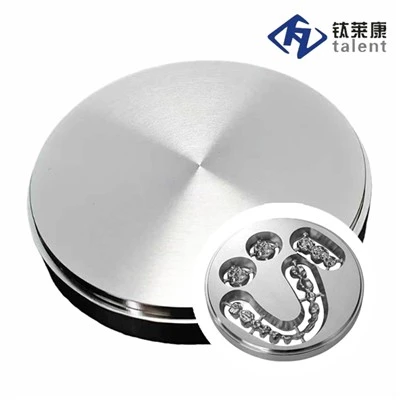
If you’re interested in purchasing our high – quality titanium plates, or if you want to discuss coating options for your specific needs, feel free to reach out. We’re always here to help and find the best solutions for your business.
Medical Titanium Plates References:
- "Titanium: A Technical Guide" by John R. Davis
- "Surface Engineering for Corrosion and Wear Resistance" edited by Peter K. Liaw and Rajiv S. Mishra
- "Biomedical Titanium Alloys" research papers from relevant medical journals
Baoji Tailaikang High-Tech Metal Materials Co., Ltd.
With abundant experience, we are one of the most professional titanium plates manufacturers and suppliers in China. Please feel free to buy titanium plates for sale here and get pricelist from our factory. For price consultation, contact us.
Address: No. 1, Southeast Cross of Gaoxin Avenue and Fenghuang 3rd Road, High-tech Development Zone, Baoji City, Shaanxi Province, China
E-mail: sale@tlkjs.com
WebSite: https://www.tlkmetal.com/
