Hey there! I’m working for a wellhead supplier, and today I wanna chat about the differences between tubing hangers in different wellheads. Tubing hangers are crucial parts in wellhead systems, playing a key role in securing the tubing string and providing a seal to prevent fluid leakage. Wellhead

Let’s start with some basic knowledge. Wellheads come in different types, like surface wellheads and subsea wellheads. And the type of wellhead often dictates the design and performance requirements of the tubing hanger.
Surface Wellhead Tubing Hangers
Surface wellheads are commonly used in on – shore oil and gas wells. For surface wellhead tubing hangers, simplicity and ease of installation are key factors.
Most of the time, surface tubing hangers are designed to be easily accessible. You know, when you’re on land, it’s a lot easier to get to the wellhead and do maintenance or make adjustments. They usually have a relatively straightforward design. For example, they might have a simple flange connection to the wellhead body. This flange connection allows for easy bolt – up and alignment.
Another important thing about surface wellhead tubing hangers is the sealing mechanism. They typically use packing seals. These packing seals are made of materials like rubber or synthetic polymers. They’re designed to create a tight seal around the tubing, preventing any oil, gas, or other fluids from leaking out. And if the seal starts to wear out, it’s not too hard to replace the packing.
Some surface tubing hangers also have features for tubing suspension. They need to support the weight of the tubing string. So, they might have a shoulder or a locking mechanism that holds the tubing firmly in place. This ensures that the tubing doesn’t move around, which could cause damage to the wellhead or other components.
Subsea Wellhead Tubing Hangers
Subsea wellheads are a whole different ballgame. Since they operate in the harsh environment of the ocean floor, subsea wellhead tubing hangers have to be designed to withstand extreme conditions.
First of all, subsea tubing hangers need to be highly reliable. Once they’re installed on the seabed, it’s very difficult and expensive to access them for maintenance. So, they are built to last. They often have more complex sealing and locking mechanisms compared to surface ones.
One common sealing method for subsea tubing hangers is metal – to – metal seals. These seals are very effective at maintaining a tight seal even under high pressures and temperatures. Metal – to – metal seals are made of high – strength metals that can withstand the corrosive effects of seawater and the high – pressure fluids in the well.
The installation process of subsea tubing hangers is also more complicated. They are usually installed using remotely operated vehicles (ROVs). These ROVs need to accurately place the tubing hanger into the wellhead. And the tubing hanger has to be designed to fit precisely with the subsea wellhead. Any misalignment could lead to problems with sealing and tubing suspension.
Subsea tubing hangers also need to have features for hydraulic control. Since they are operated remotely, hydraulic lines are used to actuate various functions, such as locking the tubing hanger in place or adjusting the seal. This requires a more sophisticated design to ensure that the hydraulic system works properly.
Tubing Hangers in Different Well Pressure Ratings
Well pressure is another factor that affects the design of tubing hangers. Different wells have different pressure ratings, and the tubing hanger has to be able to handle these pressures.
For low – pressure wells, tubing hangers can have a more basic design. The sealing requirements aren’t as strict, and the materials used for the hanger can be less expensive. These low – pressure tubing hangers might use simple elastomeric seals and have a lighter – duty construction.
On the other hand, high – pressure wells demand much more from the tubing hanger. High – pressure tubing hangers need to be made of high – strength materials, like alloy steel. They also require advanced sealing techniques. For example, they might use multiple seals in series to ensure a leak – free environment. The locking mechanism of high – pressure tubing hangers also needs to be stronger to withstand the forces exerted by the high – pressure fluids.
Tubing Hangers for Different Tubing Sizes
Well, different wells use different sizes of tubing, and the tubing hanger has to be compatible with the tubing size.
For smaller – diameter tubing, the tubing hanger will be more compact. The design has to ensure a proper fit around the tubing, and the sealing and locking mechanisms have to be sized appropriately. Smaller tubing hangers are also easier to handle during installation, but they still need to perform the same functions as larger ones.
When it comes to larger – diameter tubing, the tubing hanger is naturally bigger. The materials used for larger tubing hangers need to be stronger to support the weight and pressure of the larger tubing. And the sealing area is also larger, which means more attention needs to be paid to ensure a good seal.
Tubing Hangers in Horizontal and Vertical Wells
The orientation of the well, whether it’s horizontal or vertical, also affects the design of the tubing hanger.
In vertical wells, the weight of the tubing string acts directly downward. So, the tubing hanger mainly needs to support this vertical load. The locking and suspension mechanisms are designed to handle this vertical force effectively.
In horizontal wells, things get a bit more complicated. The tubing has a tendency to sag or bend in the wellbore. The tubing hanger needs to be able to accommodate this movement while still maintaining a good seal and suspension. Some horizontal well tubing hangers have special features, like flexible joints or expansion chambers, to deal with the thermal expansion and contraction of the tubing as well as its lateral movement.
Why Choose Our Tubing Hangers
As a wellhead supplier, we understand all these differences between tubing hangers in different wellheads. We’ve got a wide range of tubing hangers that are designed to meet the specific needs of every type of well.
Our surface tubing hangers are easy to install and maintain. They are made with high – quality materials that ensure a long service life. And we offer a variety of sealing options to match the requirements of different surface wells.
For subsea applications, our tubing hangers are built to withstand the toughest ocean conditions. We use the latest technology in metal – to – metal sealing and hydraulic control to ensure reliability and performance.
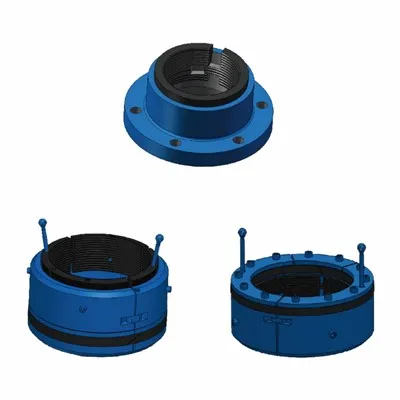
No matter what the well pressure rating, tubing size, or well orientation is, we’ve got a tubing hanger solution for you. Our team of experts can help you choose the right tubing hanger for your well and provide you with technical support throughout the installation and operation process.
Wellhead Assemblies If you’re in the market for wellheads and tubing hangers, don’t hesitate to reach out. We’re more than happy to have a chat with you about your needs and how our products can fit your requirements. Contact us for a procurement discussion and let’s work together to make your well operations more efficient and reliable.
References
- Petroleum Engineering Handbook by Society of Petroleum Engineers
- Principles of Offshore Engineering by Misra and Finnicum
- Oil and Gas Well Drilling Engineering by Michael J. Economides
Beijing LKM Energy Technology Co., Ltd.
We are one of the most professional wellhead manufacturers and suppliers in China, specialized in providing high quality OEM&ODM service. We warmly welcome you to buy durable wellhead in stock here from our factory. Also, quotation is available.
Address: Room 205, No. 40 Fuqian Street, Pinggu Town, Pinggu District, Beijing
E-mail: sales@lkmpetro.com
WebSite: https://www.lkmpetro.com/
